


Energy Efficient Windows and Doors
Your Clear Choice for Energy Efficiency
Our windows and doors have always featured the materials, designs, and options to meet a full range of climate and code requirements. Contact your dealer or builder to learn more.
Energy Efficiency Basics
What’s the first thing I need to know when it comes to windows and energy efficiency?
How do I know if a window or a door is energy efficient?
Terms You Should Know

Visible Transmittance
Visible transmittance is the amount of visible light transferred through a window. Low E coatings can reject solar heat gain without significant reduction to visible light passing through the glass. When you look at the ratings, remember that the higher the number given for visible transmittance, the more light that can come in.
Low E
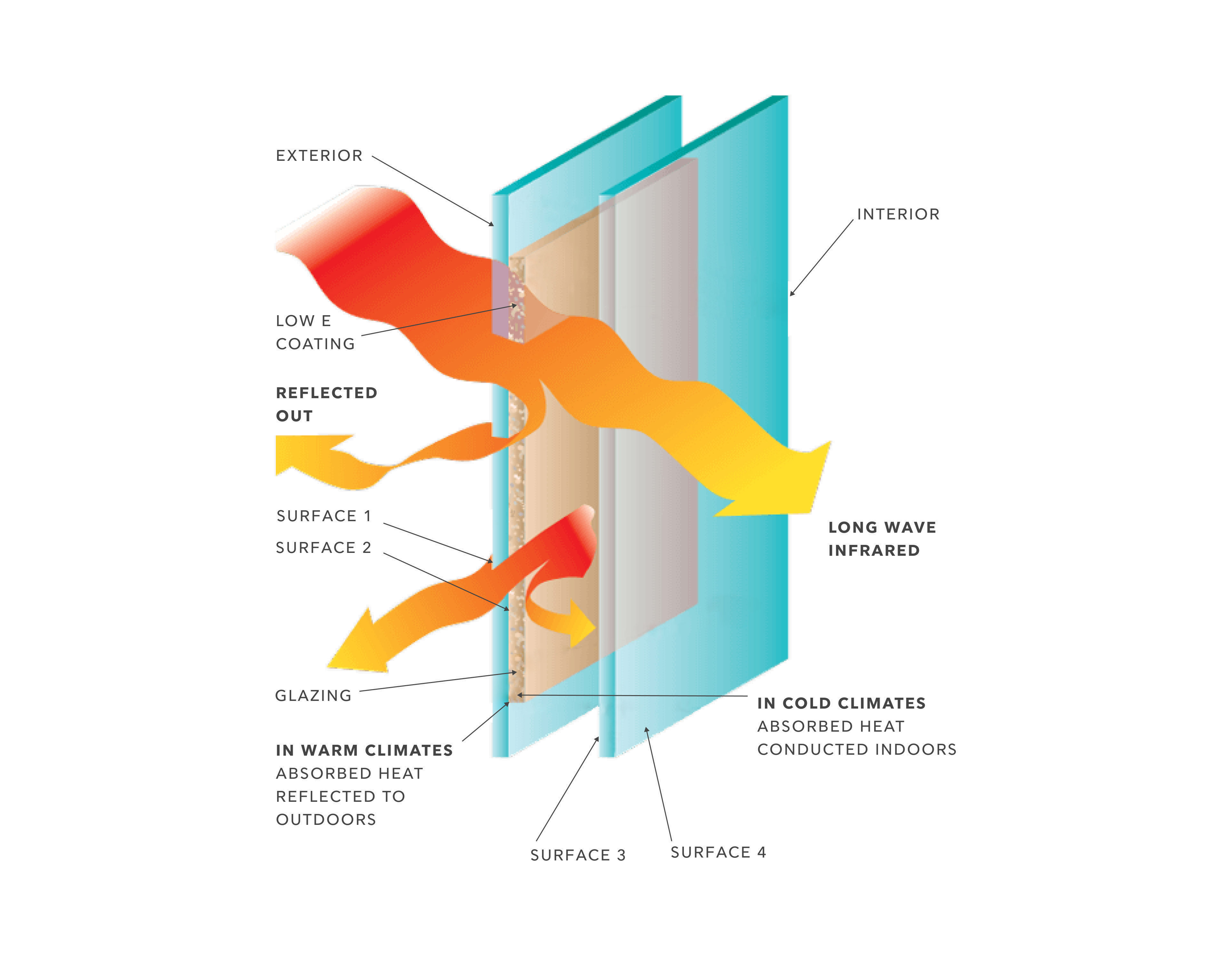
Low E stands for low emissivity. Microscopically thin, transparent metal or metallic oxide layers deposited on a glass surface suppress radiative heat flow and reflect interior infrared energy (heat) back to the inside, reducing heat loss through the glass. Various Low E coating options can manipulate heat gain to match different climate needs.
Insulating Glass (IG)
Two or more glass panes separated by energy efficient inert gas or air to reduce thermal transfer.
Gass Fills
Argon or krypton mixes slow the movement of warm and cool air in IG airspaces and improve thermal performance.
U-Factor
Simply put, U-factor measures how well a window keeps heat inside your home. It’s a measure of total heat flow through a window or door from room air to outside air. Lower numbers indicate greater insulating capabilities. It’s a particularly important measure for climates with colder winters.
Solar Heat Gain
If U-factor denotes how much heat leaves your home, the Solar Heat Gain Coefficient (SHGC) measures how much radiant heat enters your home. All you really need to know is: The lower the number, the less heat a window lets in.
ENERGY STAR
Where can I find 2025 tax information?
What does it mean to be an ENERGY STAR-certified window or door?
ENERGY STAR Criteria
| Zone | Window U-Factor | Window SHGC | Door U-Factor | Door SHGC |
|---|---|---|---|---|
| Northern | ≤ 0.22 = 0.23* = 0.24* = 0.25* = 0.26* | ≥ 0.17 ≥ 0.35* ≥ 0.35* ≥ 0.40* ≥ 0.40* | ≤ 0.26 | ≤ 0.40 |
| North Central | ≤ 0.25 | ≤ 0.40 | ≤ 0.26 | ≤ 0.40 |
| South Central | ≤ 0.28 | ≤ 0.23 | ≤ 0.28 | ≤ 0.23 |
| Southern | ≤ 0.32 | ≤ 0.23 | ≤ 0.28 | ≤ 0.23 |
Does my window need to be ENERGY STAR certified in order to be energy efficient?
Glass & Glazing
| Glazing | Description | Climate | Energy Performance |
|---|---|---|---|
| Low E1 | Features a single layer of metallic coating, which blocks heat loss to the outside while reflecting heat back into the room. | Northern | Low U-Factor High Solar Heat Gain |
| Low E2 | Features a double layer of silver on an inside surface of IG glass. It provides year round performance and comfort. This coating option provides better protection against radiant heat transfer than single layer metallic Low E coatings. | Northern North-Central South-Central | Low U-Factor Medium Solar Heat Gain |
| Low E3 | Features three layers of metallic silver and provides the lowest solar heat gain performance in climates where sun exposure is intense and cooling costs are high. | Northern North-Central South-Central Southern | Lower U-Factor Lower Solar Heat Gain |
| Low ERS | A high performance insulating glass that features an additional Low-E coating on the room-side glass surface. | Northern North-Central South-Central Southern | Lowest U-Factor |
Can you help me to better understand the numbers? What’s a good U-factor number? What’s a good SHGC?
Different homeowners seek out different levels of efficiency, but a “good” U-factor is <.30. In the Northern Zones, a U-Factor even lower than .30 may be beneficial to increase your energy efficiency and home comfort. A “good” Solar Heat Gain rating, meanwhile, on a scale from 0 to 1, is relative to climates in different regions. Low SHGC numbers are best for southern climates where there’s intense sun exposure, whereas higher SHGC values may make sense for regions with cold winters.
Can you explain Low E coatings?
The ability of a material to radiate energy (heat) is called its emissivity. Extremely thin coatings of special low emissivity (Low E) metallic material are applied to glass panes used in windows and doors to boost their energy efficiency. Low E coatings, usually applied to the inside layers of insulating glass, manage the amount of light and heat either transmitted through a window or reflected away from it.
What are the advantages to selecting triple pane windows?
Triple pane windows work best when enhanced energy performance is a key objective. Triple pane windows are designed to reduce U-Factor as compared to dual pane. They offer a range of low-E configurations, along with Low ERS, and with either an argon gas fill or air for high altitude applications. Triple pane glass can also provide more in home comfort in cold environments because the interior surface of the glass is warmer, reducing convection currents. But no matter how many panes there are, if the window is poorly constructed, poorly installed, or allows air leakage, it will be inefficient.

High Performance
Find details on Energy Performance for Marvin's products on our Energy Data Tool.